
How to Search Martin County Civil Dockets
Statewide access runs through Minnesota Court Records Online, known as MCRO, and its Case Search is the starting point for eligible Martin County civil research. Four search modes are offered: name, case number, citation number, and attorney. Searching a person or business? Enter the name fields, pick Martin from the court-location list, and then trim the results with the date-filed, category, and status filters. Civil shows up as one of MCRO's category groups. Open a result and the detail page names the more specific case type. Click the matching case number and choose View Case Details. That opens the Register of Actions, the chronological activity record the court administrator keeps. One caution: a remote result is not a certified copy. Some filings simply will not display online. Need a certified record or an eligible courthouse-terminal view? Is a document missing from the remote screen? Martin County Court Administration is the office to contact.
- Accept MCRO’s terms and choose Case Search.
- Select Name or Case Number, then set Martin County as the court location when the case is local.
- Use the Civil category and a filed-date range to reduce broad name results.
- Open the case detail, review the ROA and public documents, and separate a hearing entry from a final order.
- Contact Martin County Court Administration for a copy request or an eligible record that is not shown remotely.
Martin Civil Docket Search Channels
MCRO is not a separate Martin County portal; it is a remote statewide layer. It serves as the first web route to eligible civil records, and it can display case information, ROA entries, hearings, judgments, and selected public documents. Use the Document Search tab when you already know a case and want its available filings or orders. Hearing Search works as a schedule tool. Judgment Search narrows in on public judgment and satisfaction details. It does not show the full history of a case. Inside a district courthouse, the public-terminal layer is MPA, Minnesota Public Access Courthouse View. Its eligible statewide view can be more complete than MCRO. The same public-access rules still apply. Martin Court Administration can explain the local terminal route. The office takes requests in person or by phone, and processes eligible copy requests by mail or other listed delivery methods. Don't confuse any of this with Minnesota eFile and eServe. It handles filings and service, not public civil-docket searching.
What a Martin County Civil Docket Shows
A civil case detail opens with identifying information, then organizes the party, event, hearing, disposition, financial, and judgment material that rules allow the public to see. MCRO lists events in reverse chronological order. That means the newest item sits at the top. Reading the dates in order helps you tell a complaint or motion apart from a later order, judgment, dismissal, settlement event, or satisfaction. Keep one thing in mind. A closed case status by itself says nothing about sealing or expungement.
| Overview | Case number, title, case type, filed date, Martin County court location, judicial officer, status, and related-case information when displayed. |
|---|---|
| Parties | Public party role and name, plus limited attorney or location details where court rules permit display. |
| Case events | Event date, description, document index number, and a document link when the document is remotely public. |
| Hearings | Past and upcoming settings. A date should be checked against the current hearing notice or calendar if the setting is imminent. |
| Dispositions and judgments | Dismissal, settlement, judgment, and later satisfaction fields when the case detail includes them. |
Minnesota Statutes § 485.07 lists the register of actions, judgment roll, judgment docket, and indexes among the court administrator's records. That statute explains something practical. A civil ROA and a later satisfaction can show up as separate record events.
Martin Civil Case Types
Martin County District Court runs one unified system. Civil work is grouped by case category instead of sitting in a separate local civil courthouse. MCRO labels Civil as a category, and a case result or detail may carry subtypes such as major civil, minor civil, or eviction. Family, probate, mental-health, juvenile, and conciliation categories appear in the public record too. Those carry different access rules. Treat them as their own things rather than ordinary civil results.
| Martin court category | ROA focus | Access point |
|---|---|---|
| Major civil | Filings, motions, hearings, orders, and public judgment events. | MCRO first; MPA or Court Administration for eligible gaps. |
| Minor civil | Case events and court settings within the civil category. | MCRO and the local court’s copy route. |
| Conciliation | Small-claims case activity within the district-court system. | MCRO case detail and Court Administration. |
| Eviction | Public case activity and a possible eviction-hearing calendar entry. | MCRO, calendar for timing only, and Court Administration. |
The Fifth Judicial District's historical filing tables do include major and minor civil categories, but those are district-wide figures rather than a Martin County filing count. For current verified numbers, turn to the Minnesota court dashboards and apply a county and date filter.
Types of Martin County Civil Dockets
From the first paper onward, a civil docket can trace the life of a case. Expect entries for a complaint or petition, service activity, a motion, a scheduling conference, a hearing, an order, a judgment, a dismissal, or a settlement-related event. The case title and type tell you what kind of proceeding it is. The ROA events supply the timeline. A judgment and a satisfaction land as separate entries. Satisfaction records a later action taken on a judgment. Access does not follow the docket label. Under the MCRO accessible-documents guidance, filings made after July 1, 2015 are broadly available for major and minor civil cases. Exclusions still apply. Earlier records face narrower remote categories. So a public ROA can name a document that is not available for remote display. An eligible document may then require a court copy request.
Martin Civil Conciliation Court Records
Minnesota handles small claims through Conciliation Court. There is no separate lower courthouse for it in Martin County. These cases run inside the district-court system. So a Martin County court record from a conciliation matter travels the same roads as any other: the MCRO category or detail view, the public terminal, or a copy from Court Administration. That knowledge saves people some dead ends. No one needs to mail requests to a city office or hunt for a local justice court that does not exist.
Filing rules and record research are two different errands. The first-paper fee to start a conciliation case is $75, and copy fees sit in their own rows on the Martin fee schedule. Initiating a case? Parties can use Minnesota eFile and eServe where it is permitted, or file on paper or by mail if the court allows. For an existing case, the docket search starts with MCRO. Move to the copy route only when a certified document is what you need.
Local distinction: Martin County Conciliation Court is a district-court case grouping, not a separate Martin County courthouse or docket system.
Settings and Hearings on Martin Civil Dockets
A hearing entry shows up in the ROA. A Martin civil setting can also land on the published daily calendar. That calendar lists hearing location, hearing date, time, judicial officer, hearing type, connection type, and case number. Its setting types include motion hearing, scheduling conference, probate hearing, and eviction hearing, among others. One caution matters here. A calendar line is scheduling information, not a result.
The local calendar shifts. It leaves out confidential matters or anything not remotely accessible. Martin's court page posts the weekly public calendar at 7:00 a.m. each business day and updates it hourly. Printed calendars outside courtrooms and in public lobbies are the current local source, though. How you appear, remote or in person, comes from the hearing notice and court instruction. An old calendar line will not tell you. To pin down a known setting, try MCRO Hearing Search or ask Court Administration.
Note: a missing calendar entry does not establish that a Martin civil hearing was cancelled or no longer scheduled.
Martin Civil Records and Federal Dockets
A civil ROA from Martin County District Court is a state-court record. Federal law in the case will not convert it into a federal docket. A federal agency will not either. Nor will a party with Martin County ties. Federal civil cases live on different platforms, with different custodians. PACER provides public federal access. CM/ECF handles federal docket entries and filing. The U.S. District of Minnesota is the official federal court source. It is not a Martin County court-record channel.
The official federal court landing page shows the separate federal system. It is no substitute for a Martin County civil docket search.
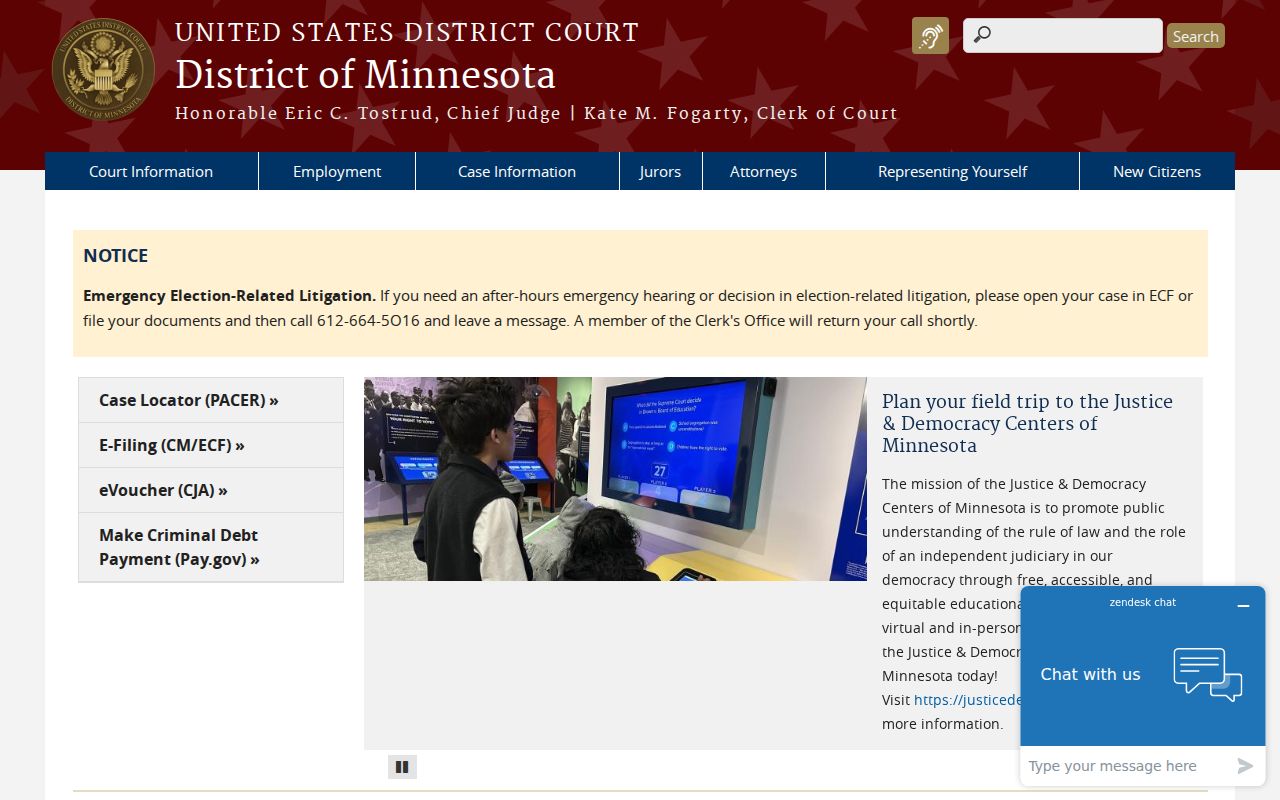
Federal cases sit outside the Martin County civil docket, and the District of Minnesota locations page lists every courthouse in that separate system.
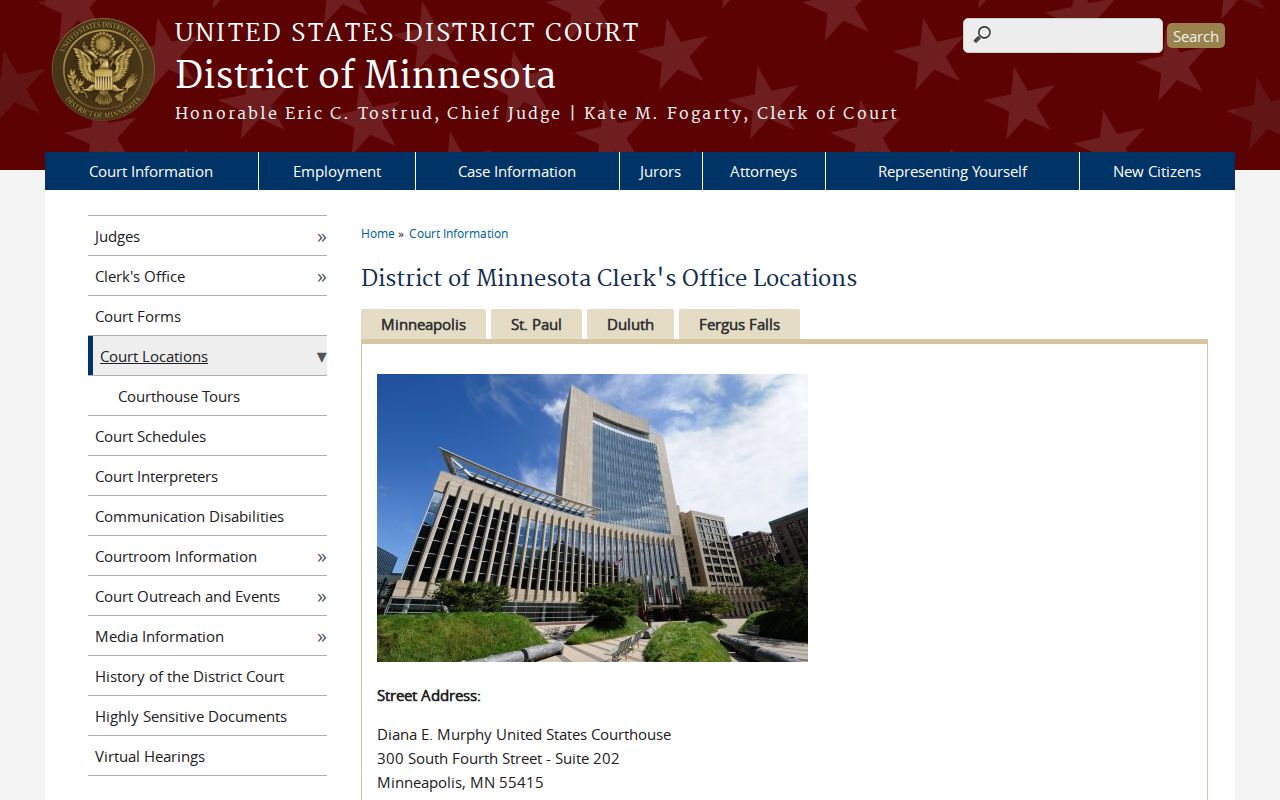
PACER requires an account, and its fees are separate from the free public MCRO search for eligible Minnesota records.
The PACER pricing page lays out the federal pricing model and why a federal search cannot replace MCRO.
CourtListener can make some RECAP federal materials available, but its coverage does not establish the completeness of a federal docket or any Martin court record.
The CourtListener source is one more federal research service, not the official Martin civil docket.
CM/ECF serves as the federal court's docket and filing platform, while Minnesota eFile and eServe handles Minnesota filing and service workflows.
The District of Minnesota CM/ECF CourtInfo page shows the separate federal docket environment.
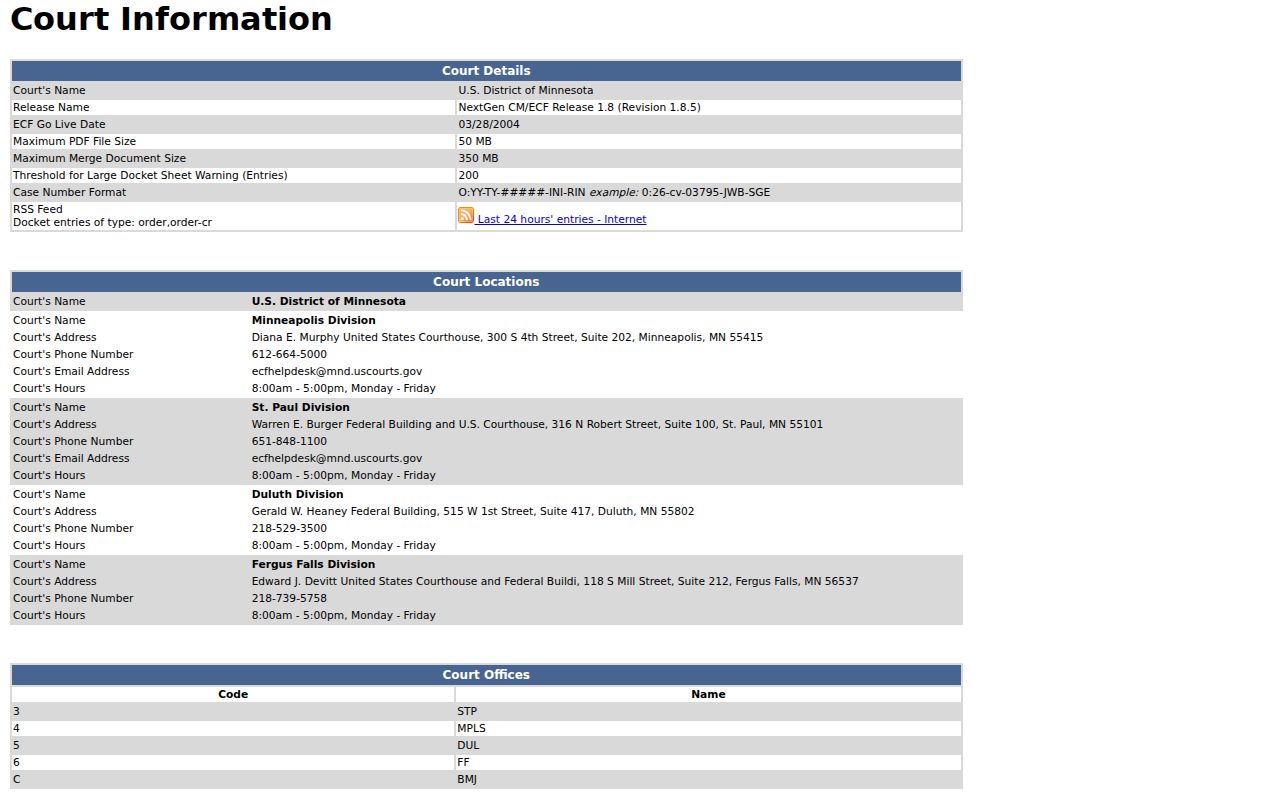
For a Martin civil matter, return to MCRO, the courthouse MPA terminal, or Martin County Court Administration. Skip the federal systems entirely.
Public Access to Martin County Civil Dockets
The Minnesota Rules of Public Access to Records of the Judicial Branch frame public access to Martin civil records. Rule 8 draws the line between court-house inspection and remote access. It also shields certain data from remote display. Rule 4 names the nonpublic and restricted categories. So a public case can show a visible ROA. A document, an address, or part of a case may stay offline anyway. When a record is missing, take the local access route. Do not conclude that no proceeding exists.
Family and post-adjudication paternity materials allow less remote document availability than the broad major and minor civil categories. Protected proceedings face still tighter rules. The Judicial Branch also sits outside the general Government Data Practices Act framework under Minnesota Statutes § 13.90. A county data-practices request will not replace the court's own copy procedure.
Martin Civil Copies and Documents
Court Administration in Martin County holds certified civil copies. It also holds any record that MCRO will not display. Bring the case number if you have it. If not, give the clerk what you do know. That could be the county, the parties, the case type, and rough dates. The statewide request form has fields for the document. These cover its date or ROA index, the copy type, delivery method, and how many copies you want. Plain copies of non-confidential records may go out by approved email or fax. A restricted record is different, since extra authorization can attach to it.
The Martin District Court fee schedule lists $0 for an uncertified plain print, scan, or screen print. A certified copy is $14. Certified and exemplified versions cost more. Confirm the current fee before you count on these figures. An older, offsite, complex, or confidential file can change the math. Most walk-in requests finish the same day. Offsite records are the exception, and the statewide copy guidance warns those can take longer.
Get the case identifier right first. The Martin case search approach beats a guess. A wrong party name or docket number leads nowhere.